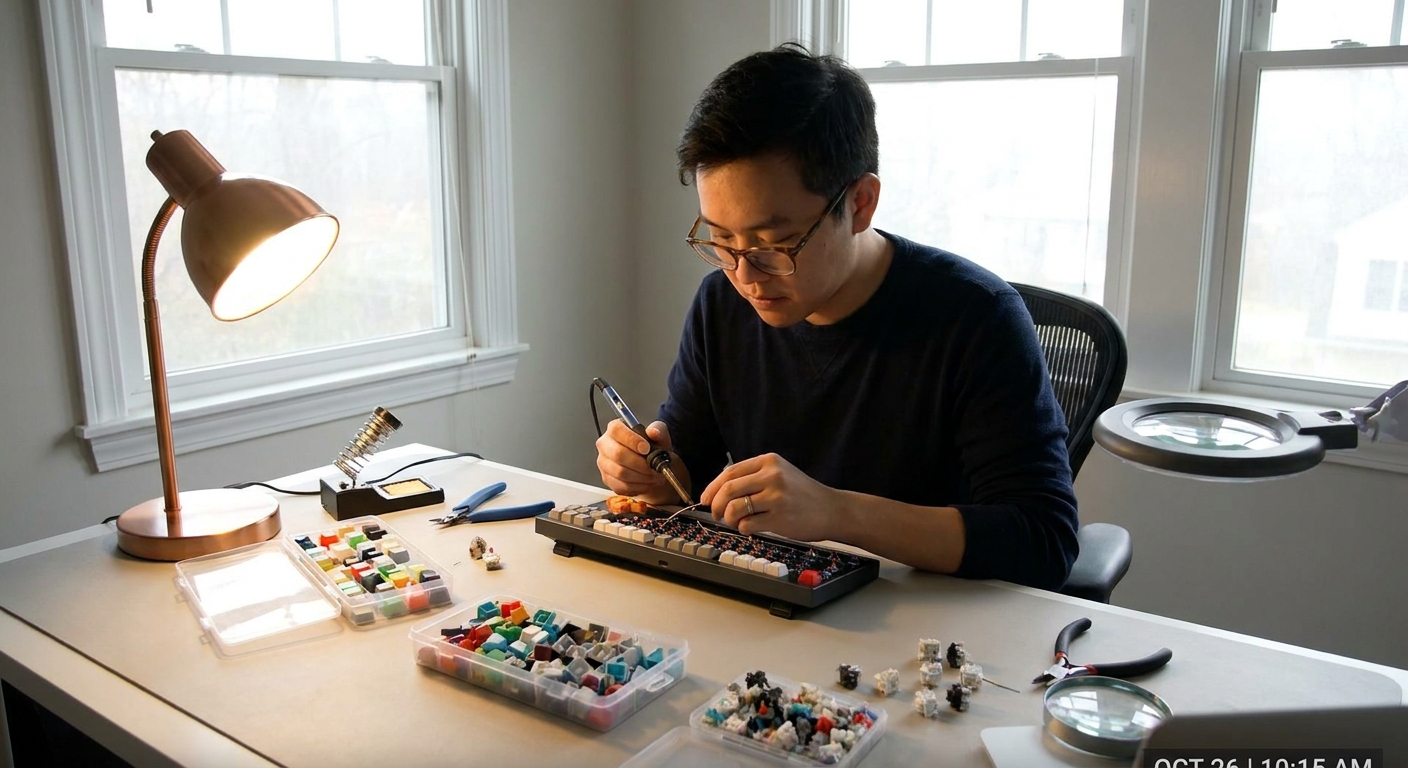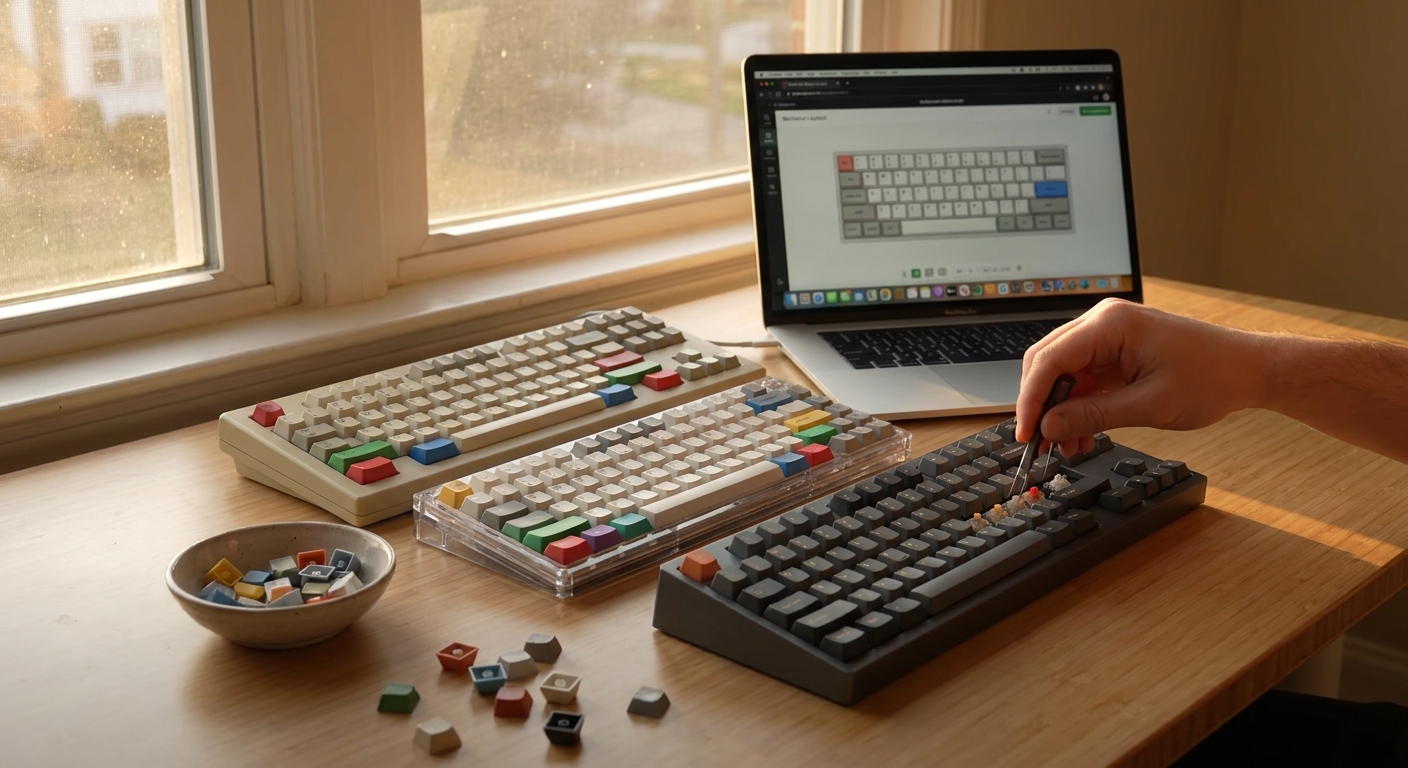
Endless switch options, mounting styles, plate materials—paralysis is real. One of the easiest ways to level up your next build is to start with a well-tested recipe and then tune it to your taste.
Why Preset Builds Are a Power Move
This article breaks down three battle-tested “signature” builds:
A Marbly Thock Daily Driver
A Crisp Clack TKL for Precision Typing
A Soft, Silent (But Still Satisfying) Office Board
Each includes concrete part-style suggestions, mod stacks, and how they actually feel and sound.
Build #1: The Marbly Thock Daily Driver (65–75%)
This is the board you grab 90% of the time: deep, rich, marbly sound; soft but not mushy; perfect for long sessions.
Core Recipe
- Form factor: 65% or 75%
- Case material: Polycarbonate (PC) or dense plastic
- Mounting style: Gasket or isolated top-mount
- Plate: Polycarbonate or POM
- Switch type: Deep-voiced linears
- Keycaps: Thick PBT, Cherry profile
What It Feels Like
On the fingers, this build is cushioned and bouncy—not trampoline-level flex, but a gentle give on bottom-out that saves your fingertips over long days. Keystrokes feel smooth and coherent across the board; no jarringly stiff or sharp zones.
What It Sounds Like
Think low-pitched “tok” or “thock” with a slight marbly character, especially on home row and alphas. Spacebar should be a deeper, resonant whump, not a plasticky rattle. No harsh overtones, no metallic ring.
Switch Picks and Tuning
Look for linears with:
- Longer poles for a defined, firm bottom-out.
- Nylon or PC housings for a deeper tone.
Examples (by category, not brand endorsement):
- Deep, muted linears: Oil King-style switches or similar full-nylon housings.
- Marbly, slightly brighter deep linears: JWK/Tecsee-style, long-pole linears.
Lube setup:
- Use 205g0 very lightly on stem rails and housings.
- Switch springs: bag lube with a thin oil (105 or similar) if pingy.
Result: A glass-smooth keypress with a subdued, dense sound.
Mod Stack
- Case foam: Medium density, covering most of the floor but not stuffed.
- Plate foam: Thin layer to tame any plate ping.
- PE foam: Optional. Use a single thin sheet if you want a bit of pop without turning the build into a pop-fest.
- Tape mod: 1–2 layers max, or skip if you prefer pure thock.
Stabs: Screw-in only, tuned with thicker lube on wires and thinner on housings. Aim for a dry, low thud on space and enter.
Keycaps: Why Thick PBT Cherry?
- PBT adds a touch of darker tone and slightly more texture.
- Cherry profile keeps the center of mass lower, making the board feel more controlled and less floaty than SA.
Result: A board that’s comfortably quiet for home use, richly satisfying on every key, and forgiving to type on for hours.
Build #2: The Crisp Clack TKL for Precision Typing
If you love sharp feedback, clear articulation, and hearing every keystroke land with purpose, this is your build. Think writer’s tool or code hammer.
Core Recipe
- Form factor: TKL (or 75% if you want compact precision)
- Case material: Aluminum
- Mounting style: Top-mount or firm gasket
- Plate: Aluminum or FR4
- Switch type: Medium tactiles or clean linears
- Keycaps: Thick ABS, Cherry or OEM profile
What It Feels Like
This is decisive and firm. There’s less flex, less give; every keystroke lands with a sense of finality. Think of it as a “mechanical pencil” of keyboards—exact and responsive.
With tactiles, the bump should be present but not punishing. With linears, expect an almost surgical smoothness with very clear bottom-out.
What It Sounds Like
The signature is a clean, high-definition clack—not loud gamer-board ping, but a crisp, well-defined report. The high end is present, but the foam and case mass keep it civilized.
You should hear:
- Individual keystrokes that are easy to distinguish from each other.
- A slightly higher pitch on modifiers, but still within the same sound family.
- Stabilized keys that are precise, not boomy.
Switch Picks and Tuning
Tactiles
Look for:
- Rounded, medium bumps (T1-style, medium tactiles).
- Housings with decent factory tolerances (less wobble, more consistency).
Lube lightly:
- Stems: 3203 or 3204 on rails only, avoid legs to preserve bump.
- Springs: Very light oil if spring ping is noticeable.
Result: A switch that ramps into the bump, then drops cleanly into a firm bottom-out.
Linears
Choose:
- Mid-weight springs (62–67g) for deliberate presses.
- Nylon/PC top and bottom housings for a bright but not piercing tone.
Lube with 205g0, thin application. Aim for zero scratch and a tight, snappy return.
Mod Stack
- Minimal to medium case foam: Just enough to remove hollowness.
- Skip PE foam if you don’t want pop overshadowing clack.
- No or very light tape mod: 0–1 layers if the board feels too dead.
You want to retain the signature top-mount crispness, not smother it.
Stabs: Prioritize perfect wire seating and minimal lube to avoid mushiness. This build benefits from slightly firmer-feeling stabs that match the board’s overall character.
Keycaps: ABS for That Classic Clack
- Thick ABS gives you that “clean click of a good keyboard” vibe—higher pitched than PBT, but controlled.
- Cherry or OEM profile to keep things familiar and ergonomic.
Result: A board that rewards precision typing, makes you aware of your rhythm, and feels like a real instrument on your desk.
Build #3: The Soft, Quiet Office Board That Still Feels Premium
This build is for open offices, shared spaces, and late-night sessions where you want to enjoy the hobby without broadcasting every thought to your neighbors.
Quiet doesn’t have to mean mushy or boring.
Core Recipe
- Form factor: 60%, 65%, or low-profile TKL
- Case material: Aluminum or well-damped plastic
- Mounting style: Gasket-mount or top-mounted with isolation
- Plate: POM or polycarbonate
- Switch type: Silent linears or ultra-smooth standard linears
- Keycaps: Thick PBT (or PBT blends), Cherry or OEM profile
What It Feels Like
You want cushioned but not vague. Keypresses should be smooth and low-vibration, with a soft landing that doesn’t fatigue. The action is predictable and stable, so you can type fast without bottoming out aggressively.
What It Sounds Like
The goal is low-volume, mid-low pitch, no sharp edges. On mic, it should sound like a muted rustle more than a crisp instrument.
With silent linears, you’ll get a dampened, cottony thock; with well-lubed standard linears and a damped case, you’ll get a soft, airier thock that’s still workplace-safe.
Switch Picks and Tuning
Silent Linears
Look for:
- Silencing pads on stem legs and/or sliders.
- Decent factory lube, since most silent housings are less forgiving.
Lube very carefully:
- Use a thinner lube (3203/3204) or a very light 205g0.
- Avoid gunking up the silencing pads; you want them to compress cleanly.
Trade-off: Silent switches can feel slightly “mushy” if over-lubed or poorly manufactured. Focus on high-quality tolerances.
Standard Linears (Quiet-Optimized)
If you don’t need true silent:
- Pick smooth, mid-weight linears.
- Lube generously but evenly with 205g0.
- Pair with good case damping.
Result: Low mechanical noise without the silenced switch artifacts.
Mod Stack
This is where quiet builds live or die.
- Case foam: Full coverage, but not overly compressed.
- Plate foam: Yes—thin but present, to absorb plate resonance.
- No PE foam: It adds pop and brightness, which is the opposite of what you want.
- Optional foam under PCB: Very thin sheet if your case has lots of vertical space.
Stabs: Tuned aggressively for silence—use thicker grease on wires and slightly more on housings, but be careful not to make them sticky.
Result: Stabilized keys that go “thmp” or “tht” instead of “tack.”
Keycaps: Why PBT Wins at the Office
- PBT’s slightly grainy texture keeps fingers settled during long days.
- Its tonal character is naturally damped, reducing top-end noise.
If you want extra stealth: dark, matte colorways hide shine and make the board visually low-key.
Tuning Each Build to Your Taste
These builds are starting points, not cages. Here’s how to safely tweak without destroying the core identity:
Make It Deeper
- Swap to PC or POM plates.
- Increase case foam density slightly.
- Choose PBT keycaps if you’re on ABS.
Make It Brighter and More Articulate
- Swap to aluminum or FR4 plates.
- Reduce or remove plate foam.
- Add 1–2 layers of tape mod.
- Use ABS caps instead of PBT.
Make It Softer Under the Fingers
- Move from tray or firm top-mount to gasket/isolated mount.
- Use flexier plates (PC/POM) and check that your PCB supports some flex.
- Consider slightly lighter springs.
Make It More Precise and Firm
- Use stiffer plates (aluminum/FR4).
- Top-mount or firm gasket stack.
- Slightly heavier springs and shorter or no flex cuts.
Honest Gear Philosophy: Don’t Chase Price, Chase Synergy
High-end parts are fun, but synergy beats flex every time. A well-tuned polycarbonate 65% with midrange linears and thick PBT caps can absolutely outclass a thousand-dollar board that’s poorly matched and barely tuned.
When in doubt:
- Decide your primary sound/feel goal (deep vs bright, soft vs firm).
- Pick a build recipe close to that goal.
- Spend your effort on switch tuning and stabs—they’re the highest-return work you can do.
The hobby is at its best when we share trusted configs and then riff on them. Take these three builds, copy them, break them, improve them, and share your results. That’s how the next signature build gets born.
From all of us at Switch Clack Lab: keep experimenting, keep recording sound tests, and don’t be afraid to rebuild the same board three times. That’s where the real magic is.