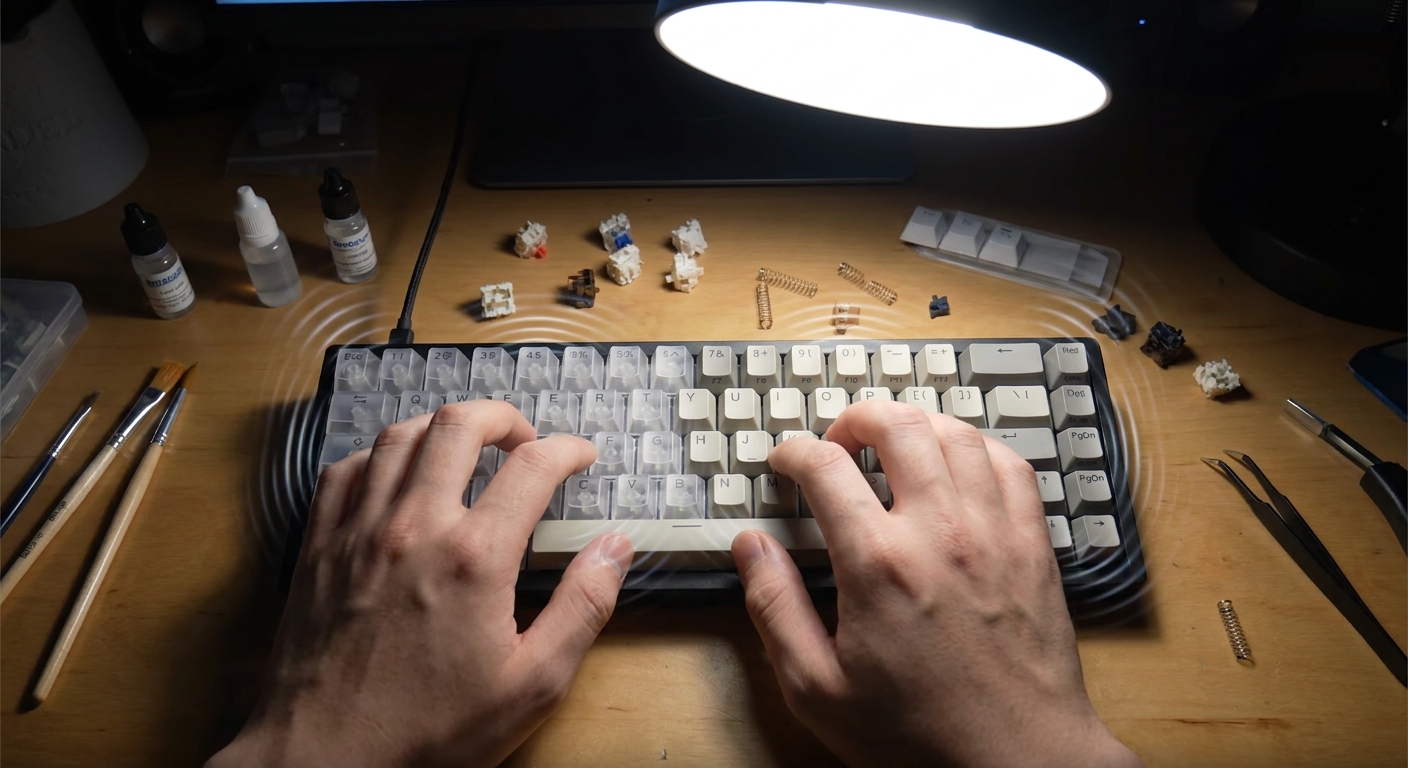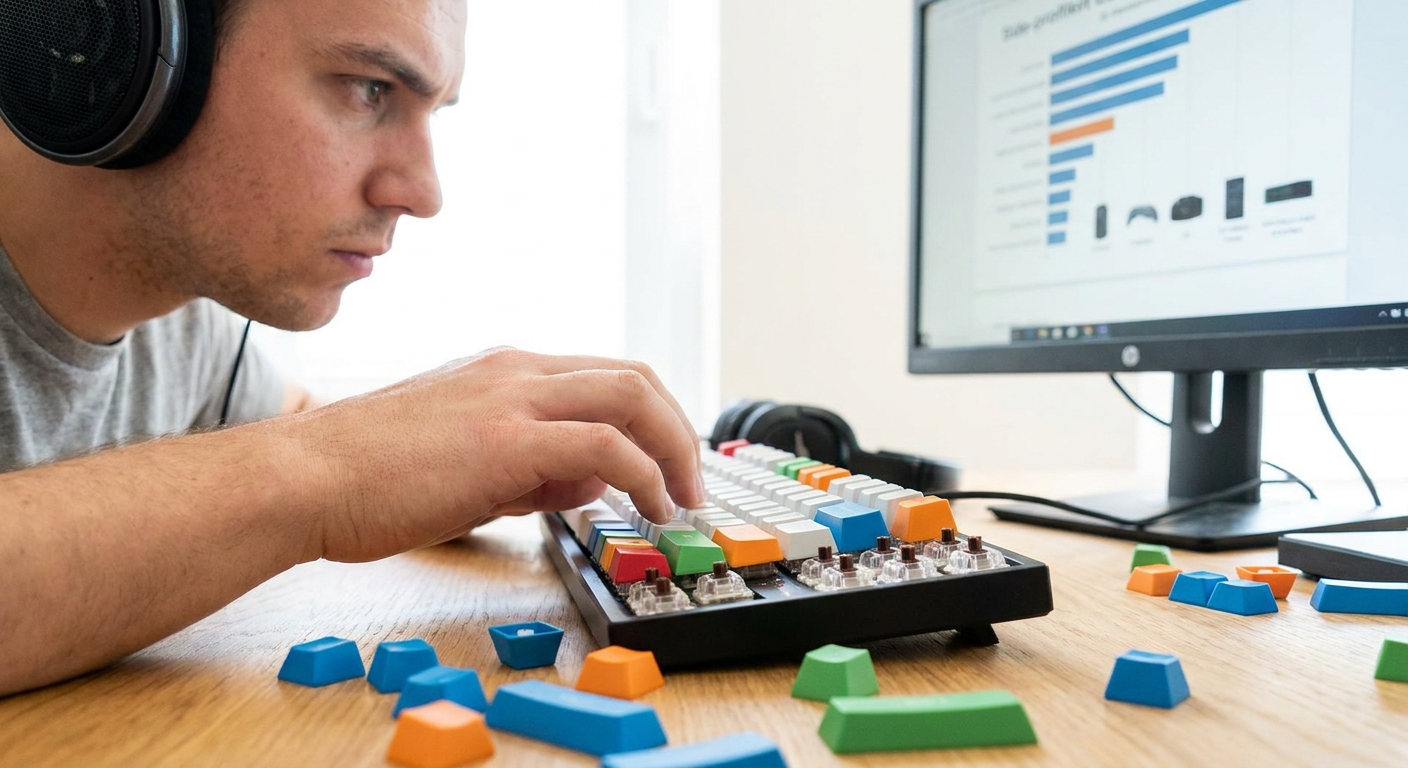
You can bolt-mod your spacebar, tape-mod your case, lube your switches to oblivion—but your keycaps are what you actually see, touch, and hear every single keystroke. The difference between thin, hollow ABS and thick, textured PBT can turn the same switch from sharp and clacky to rounded and thocky.
Introduction: Keycaps Are the Soul of Your Board
This guide is written for mechanical keyboard hobbyists who are past the “I just want RGB” stage and now obsess over sound signatures, texture, thickness, legends, and profiles. We’ll walk through how keycap choices interact with switch feel and sound, what materials and profiles really do, and which sets are worth your money.
How Keycaps Change Sound: Not Just “ABS vs PBT”
1. Thickness and Density
Think of your cap as a tuned cavity on top of the switch stem. Its thickness and material density decide how that sound resonates.
- Thin caps (0.8–1.0 mm walls)
- Sound: brighter, sometimes a bit hollow or plasticky
- Feel: more “tappy” and light
- Example: many stock gaming boards, cheap ABS or thin PBT
- Thick caps (1.4–1.8 mm walls)
- Sound: deeper and more muted; more “thock” potential
- Feel: more solid, slightly weightier keypress
- Example: GMK (thick ABS), ePBT (thick PBT), JTK, NicePBT
Same switch, same board, different keycap thickness can shift you from sharp clack to round thock.
2. Material: ABS vs PBT vs Others
ABS (Acrylonitrile Butadiene Styrene)
- Pros:
- Warmer, often deeper sound when thick
- Smooth texture, easier gliding over keys
- Best-in-class legend crispness from double-shot ABS (GMK, JTK)
- Cons:
- Shines relatively fast from skin oils
- Can feel slippery once polished
PBT (Polybutylene Terephthalate)
- Pros:
- Resistant to shine; keeps texture longer
- Typically more textured/grippy
- Sound is slightly higher-pitched but still full when thick
- Cons:
- Cheap PBT can sound chalky and thin
- Dye-sub legends can be slightly fuzzier than GMK-level doubleshot
POM, PBT/ABS mixes, and others are niche but fun:
- POM: super smooth, slightly muted sound, can feel “buttery” on linears
- ABS blends: aim to reduce shine while keeping ABS warmth
In practice, high-quality thick ABS vs thick PBT is about subtle preference: ABS for a warm, laser-precise look; PBT for durability and texture.
Profiles: How Shape Affects Feel and Acoustics
Profiles aren’t just aesthetics. They change finger travel, angle of attack, and even how sound reflects.
1. Cherry Profile
- Height: medium-low
- Shape: sculpted rows, gently angled
- Feel: comfortable, familiar, great for both typing and gaming
- Sound: often associated with the “classic thock,” especially with GMK
- Go-to for:
- Tactiles and linears alike
- People who want deep sound without tall key wobble
If you don’t know what you like yet, Cherry profile is the safe benchmark to calibrate your tastes.
2. OEM Profile
- Height: medium-high
- Shape: sculpted, but steeper than Cherry
- Feel: more aggressive angle; some find it less comfortable
- Sound: slightly brighter and more resonant due to height and form
- Most prebuilt gaming boards ship with OEM caps.
3. SA Profile
- Height: very tall
- Shape: spherical tops, strongly sculpted
- Feel: retro typewriter vibes, pronounced travel, excellent for deliberate touch typing
- Sound: loud, boomy, and resonant—if you want to hear your board, SA delivers
- Works well with linears and tactile switches if you enjoy dramatic keypress feedback.
4. DSA, XDA, and Other Uniform Profiles
- Height: medium
- Shape: flat or slightly spherical; same across rows
- Feel: consistent key feel; great for ortholinear or custom layouts
- Sound: fairly even across the board, often a bit more muted and controlled
- Love deep and classic? Go Cherry.
- Want loud vintage drama? Try SA.
- Prefer uniform rows or ortho layouts? Consider DSA/XDA.
TL;DR:
Keycaps and Switches: Matching for Sound and Feel
For Linears (e.g., Gateron Oil Kings, JWICK Black, HMX series)
- Goal: capitalize on smooth travel and deep bottom-out
- Recommended:
- Thick Cherry-profile ABS (GMK/JTK) for deep, creamy thock
- Thick PBT Cherry/ePBT for a little more clarity and snap
- Avoid:
- Very thin ABS if you hate higher-pitched clackiness
For Tactiles (e.g., Boba U4T, Holy Pandas, Gazzew Browns)
- Goal: enhance tactility while controlling harshness
- Recommended:
- Thick PBT for a crisp but not shrill bump
- SA profile if you want dramatic tactility and sound
- Note: very tall profiles can emphasize wobble if your switches are loose.
For Clickies (if you insist)
- Goal: don’t make them unbearable
- Recommended:
- Thicker PBT or Cherry profile to dampen harsh overtones
- Avoid overly resonant cases + tall caps unless chaos is the point
Build & Mod Walkthrough: Dialing in Keycap Sound
Here’s a practical step-by-step to hear what keycaps really change on your board.
Step 1: Baseline Your Build
- Pick a known switch you like (e.g., lubed linears or tactiles).
- Use a solid case build: alu or well-damped polycarb/FR4 tray.
- Install a single set of keycaps—ideally the ones you already own.
- Record a short sound test (phone is fine) in a quiet room.
Step 2: Swap Materials and Profiles
- Replace only the alpha cluster (A–Z) with another set.
- Type the same sentence or key sequence.
Listen for:
- Pitch shift (higher vs lower) - Hollow resonance vs tight, controlled thock - Texture feedback on your fingertips
Do Cherry ABS alphas and PBT mods. Then flip it: PBT alphas and ABS mods. This A/B testing is how you truly learn your preferences instead of chasing hype.
Step 3: Fine-Tune with Simple Mods
If your caps sound too sharp or hollow:
- Case foam: PE foam or poron under PCB to tighten the sound
- Plate foam: reduces harshness but can over-dampen if too thick
- Tape mod: painter’s tape on back of PCB for extra resonance control
These mods don’t replace good keycaps, but they do help reveal what your caps are doing.
Honest Gear Recommendations (Enthusiast-Approved)
Budget-Friendly But Good
- NicePBT / EnjoyPBT / KAT Milkshake clones (reputable sources only)
- Thick PBT, Cherry or similar profile
- Great entry into thicker caps without premium GMK prices
- Akko PBT Sets
- Consistently decent legends and colorways
- Slightly higher profile, but sound good for the price
Mid-Range Sweet Spot
- ePBT (when QC is good)
- Thick PBT, great for those who love textured caps
- Dye-sub legends, deeper sound than thin stock sets
- Drop + Signature Series (when on sale)
- Some GMK collabs or well-made PBT sets
High-End / Treat Yourself
- GMK Doubleshot ABS
- Benchmark for thick ABS sound and true Cherry profile
- Legends are razor sharp, color-matching is usually excellent
- JTK Doubleshot ABS
- GMK-like sound at slightly lower cost, with some unique colorways
- Premium SA Sets (Signature Plastics)
- If you want loud, sculpted, retro: this is the gold standard
Skip or Be Cautious With:
- Super-cheap “PBT doubleshot” on Amazon with inconsistent stems and wonky legends
- AliExpress/clone sets with color-matching issues and warped caps
You can get good deals in budget and gray markets—but check community reviews, r/MechanicalKeyboards threads, and sound tests first.
Choosing Your First “Serious” Keycap Set
Ask yourself:
What sound do I want?
- Deeper, warmer: lean thick ABS Cherry - Clear, textured, durable: lean thick PBT
What profile do I enjoy?
- Unsure? Start with Cherry. - Love old-school typewriters? Try SA. - Custom layouts? Consider DSA/XDA.
What’s my budget?
- $40–$70: NicePBT, Akko, mid-tier ePBT - $90–$150: GMK, JTK, premium collabs
If this is your first high-end set, I usually suggest:
A thick PBT Cherry-profile set from a reputable vendor, then a used GMK set from the aftermarket once you know your tastes.
Closing Thoughts: Your Board, Your Signature
Keycaps are where aesthetics, ergonomics, and acoustics intersect. Two boards with the same switches and case can feel and sound worlds apart just from a cap swap. That’s where the rabbit hole gets fun.
Don’t chase what YouTube calls “endgame.” Instead, treat each set as data:
- Thicker vs thinner
- ABS vs PBT vs POM
- Cherry vs SA vs uniform
The more you experiment, the more you’ll dial in a sound and feel that’s unmistakably yours.
Welcome to the part of the hobby where every cap swap is a mini science experiment—and the lab is your desk.